Replacing a cracked concrete driveway
When the old slab is cracked or uneven, we break it out and haul it away if that's in the scope, then build a fresh base so the new surface starts on firm ground.
If your old driveway is cracked, patched or sinking, we can replace it with concrete pavers laid on a firm, compacted base.
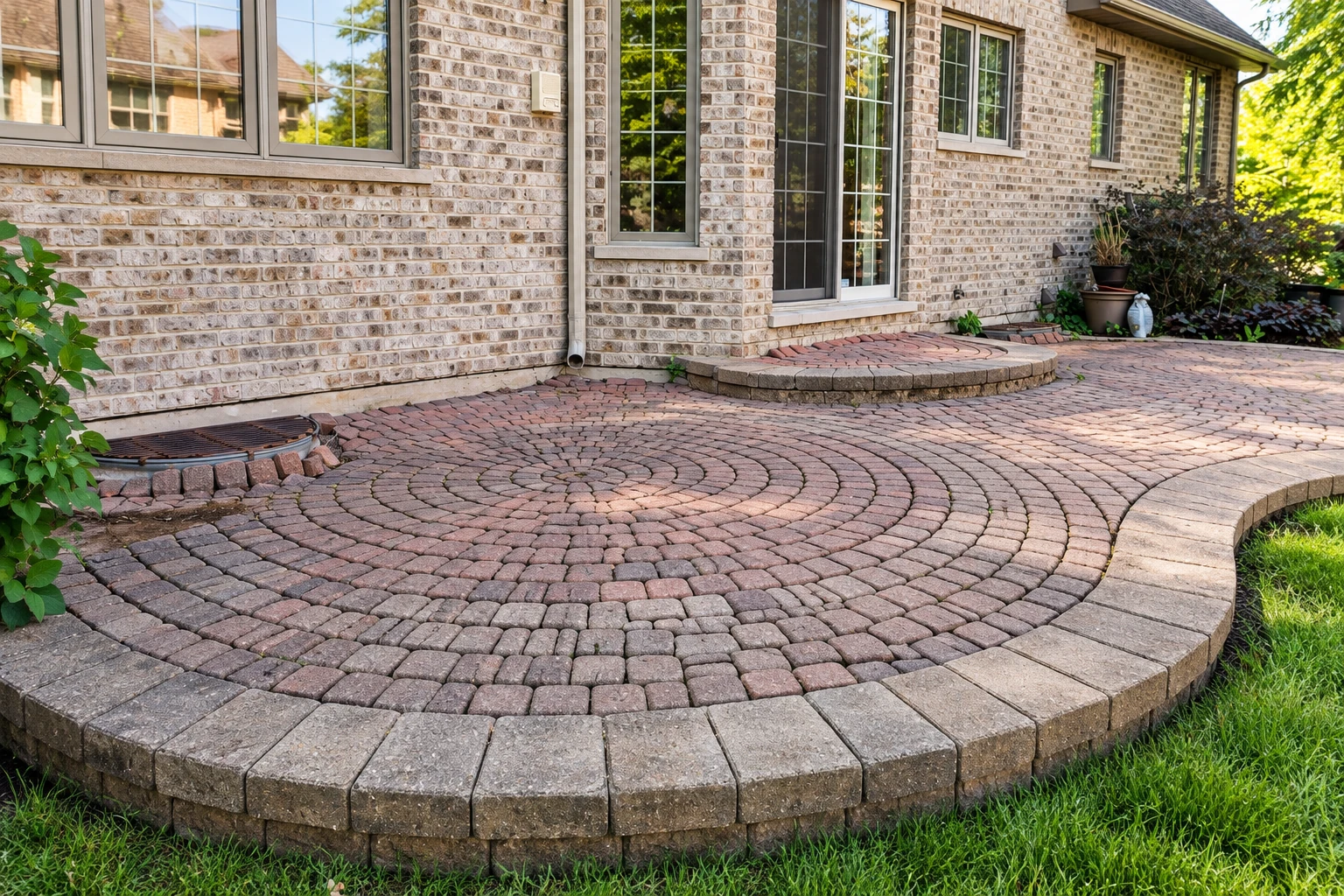
At Optimum Yorba Linda Concrete & Masonry, we install driveway pavers in Yorba Linda by digging out and packing the soil, building up a compacted base, setting edge restraints and a smooth bed of sand, and then laying the concrete pavers.
Most people call us because the old driveway is cracked, patched or sinking, and they want something that looks tidy and handles the cars. The price mostly comes down to the size of the driveway, how deep we dig and how thick the base is, whether the old slab has to be broken out and hauled away, and the paver and pattern you pick. Your own figure comes from the estimate I write after I've looked at the driveway myself.
The schedule usually turns on the street end of the job. In Yorba Linda, the driveway approach, sidewalk and parkway are typically city land, so the city advises checking your property line with the Public Works Department before construction. If the new pavers run onto that land, a licensed contractor needs an encroachment permit first, the city inspects that part of the work, and the permit can take up to two weeks to issue. The city also asks that nearby underground utilities be marked at least two full working days before we dig. We do this work across Yorba Linda and in many of the cities around it, including Placentia, Fullerton, Orange, Irvine and Norwalk.
I come out, measure your driveway and write the estimate myself, so the person pricing the work is the one who stands behind it. We've been in business since 2017.
Our masons and helpers do the digging, base work and laying, and I'm on site to check it, because the part under the pavers is what you won't see later.
We clean up properly at the end of each working day, so your front entry and the street stay clear while the job is underway. Satisfaction guaranteed on every job.
Everything starts below the surface, because pavers only stay put when the ground under them does. We dig out the old driveway or soil, pack the ground underneath, spread the base material and compact it, then set edge restraints along the sides so the pavers can't creep outward. A thin layer of bedding sand gets smoothed flat, the pavers go down in the pattern you chose, and we finish the joints and clean up.
Our estimate spells out what goes under the pavers and whether taking out the old driveway is part of the price, because that's where bids tend to differ. Two prices can look far apart, or close together, only because one includes the tear-out and a thicker base and the other doesn't, so I'd rather you see it in writing and compare like with like.
A driveway often meets other masonry around the front of the house. If the drive cuts into a slope and the soil beside it needs holding back, our retaining wall construction work can be planned along with it, and if an old brick border, step or pillar along the edge has seen better days, our masonry restoration work can bring it back to suit the new driveway.
When the old slab is cracked or uneven, we break it out and haul it away if that's in the scope, then build a fresh base so the new surface starts on firm ground.
A strip along one side or a parking pad gives room for another car, and we lay it to match the main driveway so the two read as one surface.
If the new pavers run down to the sidewalk, that end sits on city land, so the permit wait mentioned above goes into the plan before we start.
Many owners have us run the same paver, or a contrasting border, up the front walk, so the drive and the path to the door look planned together.
Send the form and we'll reply within one business day to set a time. I'll come out, measure and look at the old driveway, then write a free estimate with no obligation to go ahead.
Pacing off the length and width is plenty, because it helps me plan the visit and bring the right paver samples for us to talk through at your house.
Photos of the cracks, sunken spots and the street end of your driveway show me what we're working with before I come out to measure.
Work that reaches the sidewalk or approach is on city land, so knowing early lets me plan for that permit wait when we set a start date.
Sample paver colors, laying patterns, borders and brick and stone details you can point to when we talk through your driveway.
Practical answers about cost, permits, licensing and the base under a paver driveway in Yorba Linda, before you start comparing bids.
A sand-based concrete paver driveway in Orange County usually costs about $16 to $20 per square foot. That range leaves out tearing out an existing driveway, and choosing a concrete slab base under the pavers raises the price per square foot. I'll give you your own figure once I've measured and looked at your driveway.
Quite possibly, because the city requires a permit for most construction or repair its code regulates, and work on city land at the street needs an encroachment permit in advance. I check with the city's building office before work begins, and when a job needs a permit, we handle the paperwork and schedule the inspections.
Yes, unless the job comes to less than $1,000, needs no permit and the person doing it employs no one, because those are the limits of the state's exemption for minor work. We're licensed and insured, and our own crew of masons and helpers does the work.
Trade association guidance says a home driveway base on well-drained soil should be at least 6 inches thick. One Orange County price guide's figures are based on a 4-inch base, so ask each bidder what thickness their price covers. On clay or slow-draining soil, that guidance also recommends drain pipes along the paving.
Yes, concrete pavers are ready for traffic right after they're installed, so you can usually park on the new driveway as soon as our crew finishes. That gets your cars back in quickly, and it means any waiting on a paver job usually comes before we start, with permits, rather than after.
If your slab keeps cracking, I'd lean toward pavers. National paving guidance says the joints between pavers help reduce the cracking typically seen on concrete and asphalt, and when a utility repair or a sunken spot comes up later, a crew can lift the same pavers and set them back with no jackhammers, so the fix stays small.
We take calls at (714) 386-7680 every day until 10 PM, so you can call after work or use the form to set up a visit.