Mortar washing out of joints
When the joints look sandy or sunken, water gets in behind the face of the chimney. Repointing them is usually the simplest repair, and it slows wear on the brick around them.
Crumbling mortar, cracked brick or a leak at the roof line? We repair it properly and tell you plainly what patching will and won't do.
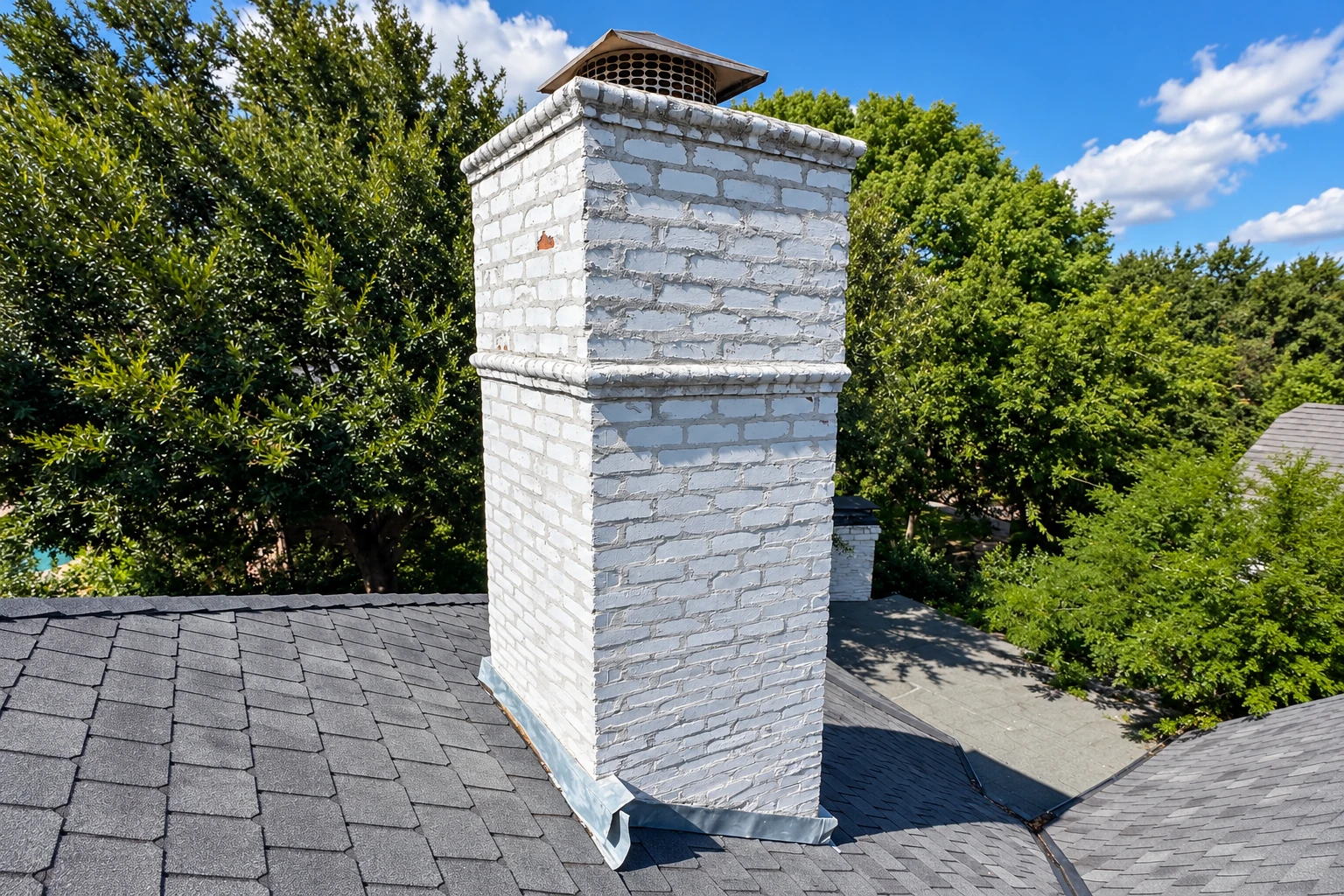
Chimney repair in Yorba Linda usually means repointing, which is raking out worn mortar and packing the joints with fresh, along with patching isolated cracks in the brick, so the chimney sheds water and looks sound again.
Most calls start with something you can see from the yard, such as mortar washing out of the joints, a brick that has cracked or flaked, or a water stain on the ceiling beside the chimney. The price moves with how much of the chimney needs new mortar, how many bricks need replacing, how high and steep your roof is, and whether the seal at the roof joint has to be redone. The schedule turns mostly on the weather, on finding brick that matches yours and on whether the city wants a permit, which we check with its building office before we start. The estimate gives you the figure for your own chimney.
Here in Yorba Linda, the South Coast AQMD's wood-burning rule calls for cutting back on wood burning on No-Burn days from the beginning of November through the end of February, so plan your winter fires around those days once the repair is done. Parts of the city also fall in Moderate, High and Very High Fire Hazard Severity Zones, so it's worth knowing which one your house is in before you plan work on a chimney you burn wood in. We do the same work in many of the cities around us, including Placentia, Fullerton, Orange, Irvine and Norwalk.
I look at every chimney and write every estimate myself, so the person explaining your options knows exactly what our crew will be doing on your roof.
The work is done by our own masons and helpers, not handed to another company, and I'm on site to check the joints and brick as they go in.
Chimney work drops mortar and dust on roofs, gutters and planting beds, so the crew cleans up properly at the end of each day rather than leaving it all for the last.
Before I write anything, I'll tell you what a repair can and can't do. Fresh mortar and patching make a chimney look sound again and keep water out of the joints, but they don't make it any sturdier in an earthquake, and I'd rather you know that before you decide than find out afterward.
If you mainly want a tidy, weathertight chimney, a repair is usually the right choice, and it's the one I'd recommend for most chimneys in good overall shape. If quake safety is what's really worrying you, we'll talk through the bigger options first, so you don't pay for patching you'd replace later.
For the repair itself, our crew rakes the worn mortar out to sound material and packs in new mortar matched to the old in color and strength, the same careful joint work we do on our tuckpointing jobs. Bricks that have cracked through or lost their face are cut out and replaced, just as on any brick repair, so the finished chimney reads as one piece rather than a patchwork.
When the joints look sandy or sunken, water gets in behind the face of the chimney. Repointing them is usually the simplest repair, and it slows wear on the brick around them.
A brick that has cracked through or lost its face lets water into the chimney. Catching it early keeps the repair small and makes the new brick much easier to blend in.
A ceiling stain beside the chimney often points to the flashing, the seal where it passes through the roof. That seal keeps water out of the house, so we look at it on every chimney.
One liner maker advises a certified chimney sweep clean and inspect the chimney before relining, to confirm the masonry is sound enough. If weak joints or brick turn up, we repair them first.
We'll reply within one business day to set a time. I'll come out, look at your chimney and write you a free estimate, with no pressure and no obligation to go ahead.
Please tell us roughly when the house was built. Older chimneys are often unreinforced, and knowing the age helps me plan what to look for before I go up.
A few phone photos of cracked mortar or the joint where the chimney meets the roof help me arrive with the right questions and, where it's useful, a brick sample to compare.
If you noticed new cracks after an earthquake, please mention it. Damage that reaches low in the chimney changes the whole conversation, and I'd rather know that before I arrive.
These photos show mortar joint styles, brick colors and stone finishes we can talk through when matching a repair to your chimney.
These are the questions homeowners often ask about chimney repair, from cost and permits to what an earthquake does to brick.
Across the US, chimney repair usually costs about $1,500 to $5,500 per job, covering everything from crown and cap work to a major rehab with a reline. That's a national range, not a Yorba Linda price or ours. I'll give you the figure for your own chimney once I've looked at it on site.
No, not on its own. San Bernardino County's guidance on earthquake-damaged chimneys says repointing and patching do little to reduce damage in future quakes, and that older, unreinforced chimneys with worn mortar are the most vulnerable. Even chimneys built to modern standards can be badly damaged, so if quake safety matters to you, plan for more than surface repair.
Then the county guidance says the entire firebox and chimney need to be replaced, not repaired. The firebox is the box that holds the fire, and when damage reaches below its shoulder, the new chimney uses light-frame construction above the foundation. That's a much larger job than patching, so I'll tell you plainly if I see it.
The city's permit list doesn't settle it, so we ask before any work begins. Yorba Linda requires permits for most code-regulated construction or repair work, and its list names fireplaces and roof repairs but not chimney repair. The Building Department answers permit questions at 714-961-7120, and when a job needs a permit, we handle the paperwork and schedule the inspections.
Masonry work falls under the masonry contractor license, which California's Contractors State License Board describes as installing baked clay products like brick, stone and the fire brick used where it faces the heat. It's fair to ask any chimney contractor which license class covers your job. We're licensed and insured, and I'm glad to answer that at the estimate.
Call (714) 386-7680 or send the form whenever it suits you, since we take calls every day from early morning until 10 PM.